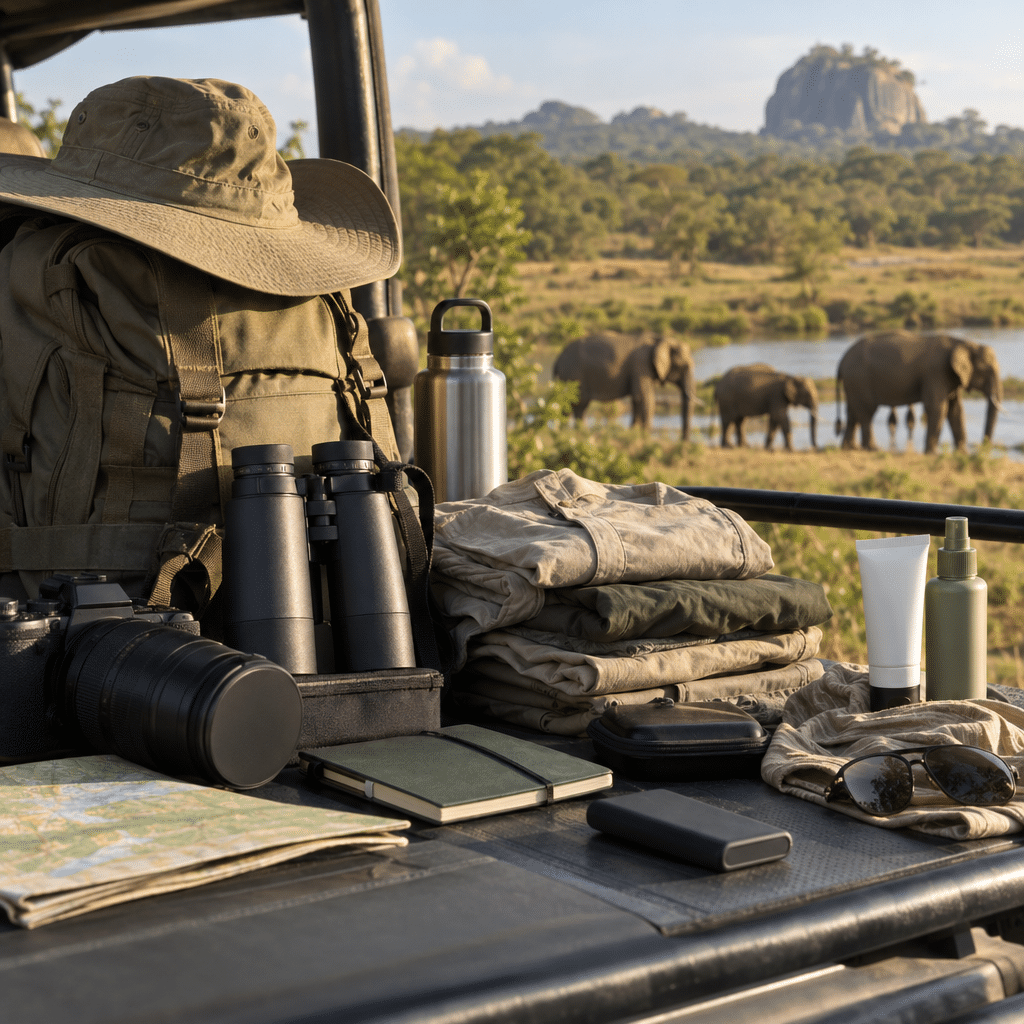
A useful Sri Lanka safari packing list includes light, breathable neutral clothing, a hat, sunscreen, insect repellent, sturdy shoes, a refillable water bottle, personal medicine, and camera protection. Add a warm layer for early drives, a rain shell during monsoon months, and a soft-sided bag that fits a 4WD jeep. Keep valuables and photography gear in a small day bag, and avoid white clothing, camouflage, strong scents, and single-use plastic.
Table of Contents
Location Sri Lanka
Sri Lanka safari packing list: What matters most
A Sri Lanka safari packing list needs light layers, sun protection, insect repellent, water, and dust-safe gear. Wear neutral, quick-dry clothes, closed shoes, and a hat. Add a fleece or rain shell for changing weather.
Keep these essentials in a small day bag: a passport copy, personal medicine, tissues, hand sanitiser, refillable water bottle, snacks, sunglasses, power bank, and phone. A soft-sided duffel bag suits a 4WD jeep better than a hard suitcase with limited space.
For a one-day wildlife drive, one outfit and a spare shirt are usually enough. A longer trip needs laundry-friendly clothes, camera batteries, and separate bags for clean, dusty, and wet items.
What should you wear on safari in Sri Lanka?
| Item | Best choice | Why it helps |
|---|---|---|
| Shirt | Lightweight long-sleeve quick-dry shirt | Blocks sun, dust, and insects without trapping much heat |
| Trousers | Loose, breathable trousers or hiking pants | Protects legs and handles rough jeep steps better than shorts |
| Colours | Khaki, olive, tan, brown, or muted grey | Creates less visual contrast near wildlife |
| Footwear | Closed trainers or light hiking shoes | Works for jeep exits, short walks, and dusty ground |
| Layer | Thin fleece, cardigan, or rain shell | Useful before sunrise, in wind, or during rain |
| Accessories | Wide-brim hat, sunglasses, and buff | Covers the face and neck from sun and dust |
Clothing rules, modesty, and wildlife ethics
Neutral clothing is practical, not required. Bright red, fluorescent colours, and reflective fabrics can stand out. Camouflage may be unsuitable because it resembles military clothing. White clothing quickly shows dust and can look bright in open grassland.
Why cannot you wear white on safari? White is not automatically dangerous. However, it reflects strong light, attracts dust, and creates sharp movement near animals. Muted colours are quieter. Avoid perfume, scented hair products, loud jewellery, and rustling plastic. Wildlife viewing needs calm observation.
Women, children, and Muslim or modest-dress travellers can wear loose long trousers, long skirts, and breathable tops covering the shoulders. Temples and rural communities may require more coverage, so a light scarf helps beyond the park. Children also need a sun hat, familiar snacks, and a spare top.
The Sri Lanka Department of Wildlife Conservation sets park rules. Operators may add safety limits. Follow the guide’s instructions, never feed animals, and take rubbish out. Ethical clothing cannot replace quiet behaviour and respectful distance from an Asian elephant or Sri Lankan leopard.
Pack for Yala, Udawalawe, Wilpattu, or Minneriya
| Park | Conditions to expect | Useful additions |
|---|---|---|
| Yala National Park | Dry tracks, open scrub, dust, and long periods in the jeep | Dust cover for camera gear, water, lip balm, and a light scarf |
| Udawalawe National Park | Open grassland and frequent elephant sightings | Strong sun protection, binoculars, and spare drinking water |
| Wilpattu National Park | Forested tracks, shaded areas, and puddles after rain | Insect repellent, closed shoes, rain shell, and dry bag |
| Minneriya National Park | Open reservoirs, grassland, heat, and seasonal elephant gatherings | Hat, sunglasses, telephoto lens, and extra battery |
| Horton Plains National Park | Cooler highland weather, mist, wind, and wet trails | Warm layer, waterproof shell, grippy shoes, and gloves |
How weather changes your Sri Lanka safari packing list
May–September
Southwest monsoon influence for Yala and southern travel routes
October–January
Northeast monsoon influence for eastern and northern regions
1 rain shell
A compact safeguard for sudden showers in any season
2–3 litres
A sensible daily water capacity for hot, active travel
What to pack by season and safari region
Weather changes by coast and park. A Sri Lanka safari packing list should follow your route, not one national forecast. Yala is often hot and dry during the southwest monsoon. Minneriya and nearby cultural-triangle parks can have different rain patterns.
December to March is often comfortable for southern and western travel. However, mornings can still feel cool in an open jeep. April and September are shoulder months. Pack sun protection and a compact rain shell. October to January can bring heavier showers in the north and east, including routes near Wilpattu or Minneriya.
Rain does not always cancel a safari. It can make tracks muddy and protect electronics from sudden showers. Put your phone and camera inside a dry bag. Do not seal wet clothing in plastic for days. Air clothing at the lodge to prevent mildew.
If your itinerary includes Horton Plains, pack for cooler, windier weather than Yala. Check current forecasts, park notices, and operator advice before leaving. Conditions and access rules can change.
What belongs in the jeep day bag?
-
1
1. Dress for the first hour
Wear trousers, a long-sleeve layer, a hat, and closed shoes. Early starts can feel cool before the sun rises.
-
2
2. Protect health and comfort
Pack sunscreen, picaridin or DEET repellent, prescription medicine, motion-sickness tablets if needed, tissues, and hand sanitiser. Follow medical advice for personal health needs.
-
3
3. Carry water and simple food
Bring a refillable water bottle and low-mess snacks such as nuts or crackers. Avoid noisy wrappers and take every item back to the lodge.
-
4
4. Secure electronics
Use a dry bag or padded pouch for a phone, camera, spare batteries, memory cards, and power bank. Dust can enter lens changes and charging ports.
-
5
5. Leave room for movement
A small soft bag is easier to hold in a 4WD jeep than a full backpack. Keep the aisle, doors, and emergency equipment clear.
Wildlife photography gear and charging strategy
Best practical camera setup
A camera with a telephoto lens, one spare battery, and binoculars is enough for most travellers. Keep the camera on a strap, use a clear rain cover, and store the lens in a padded pouch when driving dusty tracks. A phone can handle landscapes and close lodge scenes, but never move toward wildlife for a better frame.
Do you need binoculars or camera equipment?
Binoculars are more useful than many travellers expect. They help when animals stay far from the track. Compact 8×32 binoculars provide a broad view and remain comfortable in a moving jeep. A telephoto lens helps with distant birds and leopards, but it is optional.
Dust is the main camera problem in dry parks. Change lenses as little as possible. Keep a blower and microfibre cloth in your bag. Never wipe grit across glass. In rain, use a rain cover or dry bag. Let damp equipment warm slowly inside its pouch.
Remote parks may offer little charging access. Bring a power bank, spare batteries, memory cards, and a travel adapter suitable for Sri Lanka. Charge everything overnight. Avoid charging loose batteries where dust or moisture can reach the contacts.
What operators provide, and what travellers must bring
Pros
- Many Sri Lankan Wildlife Safari operators provide the 4WD jeep, driver, and basic route knowledge.
- Lodges often provide meals, bed linen, and sometimes drinking water or binoculars.
- A small bag makes transfers between safari, beach, temple, and hill-country stops easier.
Cons
- A guide may not provide sunscreen, insect repellent, personal medicine, or a suitable rain shell.
- Vehicle seating, roof cover, and luggage space vary, so confirm details before booking.
- Hard suitcases, large tripods, and excess luggage can be awkward or refused in a shared jeep.
The overlooked part of a Sri Lanka safari packing list
Safari drives can last several hours. Toilets may be unavailable between park entrances and rest points. Use the toilet before leaving, carry tissues, and ask the driver about planned stops. Preventing motion sickness is easier than treating it. Sit facing forward and pack your usual medicine.
For a one-day safari, take one main outfit, one spare shirt, one light layer, one hat, one bottle, and one small day bag. For three or more safari days, add two or three shirts, two trousers, three pairs of socks, a laundry bag, and a second dry bag. Quick-dry clothes reduce heavy luggage.
Use packing cubes to separate beachwear, temple clothing, and safari clothes. A soft-sided duffel bag is safer for vehicle storage than a rigid case. Ask the operator about realistic baggage limits, especially when several guests share a jeep.
Use sunscreen and repellent even when the air feels mild. Picaridin is a useful low-odour option. DEET is another effective choice when used as directed. Before travelling, speak with a qualified travel clinic about malaria risk, dengue prevention, vaccinations, and personal medication.
For context, compare your kit with the advice on how long a safari takes because a pre-dawn drive needs more layers than a short afternoon outing. The guide to the best time for a safari can help match clothing to monsoon conditions. If you are balancing gear against spending, review the Sri Lanka safari cost guide before choosing premium equipment.
Printable one-day and multi-day checklist
Use this final Sri Lanka safari packing list as a quick check before leaving the hotel. Mark each item on paper or copy it into a phone note.
☐ Neutral quick-dry shirts: 1–2 for one day, 3–4 for several days
☐ Trousers: 1 pair for one day, 2 pairs for a multi-day route
☐ Thin warm layer and compact rain shell
☐ Closed shoes, spare socks, hat, sunglasses, and scarf or buff
☐ Sunscreen, picaridin or DEET, lip balm, tissues, and hand sanitiser
☐ Refillable water bottle, low-mess snacks, and motion-sickness supplies
☐ Prescription medication and a small personal first-aid kit
☐ Binoculars, camera, telephoto lens if wanted, spare batteries, cards, and cloth
☐ Dry bag, power bank, travel adapter, and phone
☐ Soft-sided duffel bag, laundry bag, and reusable rubbish pouch
Do not pack high heels, large hard cases, strong perfume, camouflage outfits, disposable plastic bottles, or bulky tripods unless the operator confirms space. The best safari essentials are compact, quiet, washable, and useful in more than one setting.
Sources
- Sri Lanka Tour Packing List
- What to pack for Sri Lanka (under 15kg)!
- Complete Packing List for Sri Lanka
Answers
Frequently Asked Questions
What is the 5 4 3 2 1 rule for packing?
It is a flexible clothing method: five tops, four bottoms, three pairs of shoes, two warm layers, and one special outfit. It is a starting point, not a strict Sri Lanka safari rule; reduce shoes and adjust quantities for laundry and weather.
What should I wear on a safari in Sri Lanka?
Wear loose, breathable neutral clothing, closed shoes, a hat, and sunglasses. Add a warm layer for early mornings and a rain shell during wet weather.
Why can't I wear white on safari?
White is not forbidden, but it shows dust, reflects bright light, and creates strong visual contrast. Muted colours are more practical and less distracting near wildlife.
What is the 3-3-3 rule packing?
The 3-3-3 rule usually means packing three tops, three bottoms, and three pairs of shoes, although versions differ. For a Sri Lankan safari, three pairs of shoes are often excessive; one comfortable closed pair and sandals may be enough.
What should I pack for an early-morning jeep safari?
Wear a light fleece or long-sleeve layer with trousers and closed shoes. Carry a hat, water, sunscreen, repellent, tissues, personal medicine, camera protection, and a power bank.
Do you need binoculars or camera equipment?
Binoculars are strongly useful for distant animals and birds, but camera equipment is optional. A phone, compact camera, or camera with one telephoto lens can cover most safari needs.
Should you bring insect repellent and sunscreen?
Yes. Bring both, even on cloudy days, and apply them according to the product instructions. Picaridin and DEET are common repellent options, but travellers should seek medical advice for individual health concerns.
What items are not useful or appropriate on safari?
Avoid strong scents, camouflage clothing, white outfits, noisy plastic packaging, high heels, large hard suitcases, and bulky gear that cannot fit safely in the jeep. Do not bring items that encourage feeding or approaching wildlife.

Written by